Thursday, September 29, 2011

Sylvia Robinson, 1936-2011


The great vocalist and label executive Sylvia Robinson has passed away at the age of 75. Robinson was a one-hit wonder twice over - first with Mickey and Sylvia and the 1957 classic "Love Is Strange," then with her 1973 solo hit "Pillow Talk" - as well as the mastermind behind yet another one-hit wonder, the Sugarhill Gang's 1979 "Rapper's Delight." "Love Is Strange" is one of my all-time favorite singles, so let's revisit something I wrote about that a few years ago:


It all goes back, as so many things do, to Bo Diddley. Bo wrote and recorded "Love Is Strange," although the guitar lick had been composed by Jody Williams, who played with Bo, for an instrumental called "Billy's Blues." Bo took that lick, put it together with his own parts, and had himself a tune. In the ways of pop songs in the 1950s, though, Diddley couldn't take the songwriting credit because of a legal dispute, and there was no way he was giving it to Williams, so "Love Is Strange" went down on record as being written by Ethel Smith, Bo's wife.

I'm not sure when Bo cut his version of "Love Is Strange," whether it was a single, or B-side, or what, but that track did end up on I'm a Man: The Chess Masters 1955-1958, his 2007 box set. I do know that Bo and Jody Williams were playing it on tour in 1956, and one of the other acts on that tour was Mickey and Sylvia.

Raised in an orphanage in Kentucky, MacHouston "Mickey" Baker ran away to New York City at the age of 16. There he worked as a pool shark for a while before picking up a guitar at a pawnshop. He taught himself to play jazz on it but soon realized the bluesmen were the ones making the real money. By the mid-1950s, Baker was the lead session guitarist for Atlantic Records as well as on the Savoy and King labels.

He also taught guitar, and one of his students was a singer named Sylvia Vanderpool. Sylvia supposedly cut her first record at the age of 14, in 1950, and was signed to the Cat label as "Little Sylvia" when she met Mickey. Mickey, cognizant of the success of Les Paul and Mary Ford, asked her to form a musical duo with him. (Rumor has it that Mickey wanted them be a combo in more ways than one, but Sylvia rebuffed him.)

Their first single (I think we're in 1954 at this point) was on that Cat label, "Fine Love" b/w "Speedy Life"; they were billed as by "Little" Sylvia Vanderpool and Mickey Baker and His Band. Then they moved on to the Rainbow label and released three singles as Mickey and Sylvia in 1955. That apparently landed them the slot on the Diddley tour.

According to Dave Marsh, Bo didn't want to record "Love Is Strange" at all because of a war with his publishers, so when Mickey and Sylvia expressed interest in the song, he went ahead and gave it to them. On October 17, 1956, Mickey and Sylvia went into a studio and laid down the song with the drummer Bernard Purdie (later the drummer for James Brown and the musical director for Aretha Franklin), making his recording debut. Producer Bob Rolontz overdubbed and overdubbed the guitars, and by the end of the day, Mickey and Sylvia had another single.

By the time Mickey and Sylvia got done with the song, it didn't sound much like Bo Diddley. The blues guitar contrasted nicely with M&S' harmonies, but it was the spoken-word passage - which had been a gruff call and response in Bo's version - that really made it special. "Love Is Strange" hit the Top Forty on January 12, 1957, and went as high as Number Eleven on the pop charts. It spent two weeks at Number One on the R&B chart.

Mickey apparently hated touring and the high life associated with being a pop star. M&S had a few more R&B hits, but in 1959, Mickey decided to break up the group. After a few more years of session work and a single billed to "Mickey and Kitty," Baker split for France in 1962 and went back to playing mostly jazz. Sylvia married a gentleman named Joe Robinson in 1964, and the two of them started a string of indie labels in New Jersey: All Platinum, Stang, Turbo and Vibration.

In 1973, Sylvia offered a song called "Pillow Talk," which she had co-written, to Al Green, but the Reverend Al turned it down as too risque. So Sylvia recorded it herself, for her own Vibration label, and it turned out to be a huge smash, going to Number Three on the pop charts and spending two weeks at Number One on the R&B charts, just like "Love Is Strange" had 16 years earlier. Then, Sylvia pulled off a third act in 1979 when she herded a group of rappers into the studio and christened them the Sugarhill Gang.

Like Sylvia, "Love Is Strange" resurrected itself as well when it appeared in the 1987 film Dirty Dancing, as lip-synced by Patrick Swayze and Jennifer Grey. They were supposedly just goofing around in rehearsal, miming the famous spoken-word bridge, but director Emile Ardolino had the cameras rolling, and liked it so much he kept it in the final cut. By 1987, that eerie guitar still sounded futuristic.

Buddy Holly, the Everly Brothers, Paul McCartney & Wings and Peaches and Herb all covered "Love Is Strange," as did, of course, Bo Diddley, at some point. None of them sounded as good as Mickey and Sylvia.

Monday, September 26, 2011

Would Somebody Please Buy Dustin Hoffman a Calling Card?

In The Graduate, Dustin Hoffman offers to give Norman Fell a twenty-dollar bill if he'll just let him use his telephone.

In Marathon Man, Dustin Hoffman gives a cab driver his expensive watch in exchange for some change to use a pay phone.

Saturday, September 10, 2011

My 9/11 Remembrance

My son Jack had just started kindergarten, and around noon, the teachers decided they had better tell the children what had happened. When Jack heard that planes had flown into the World Trade Center and knocked it down, he raised his hand and said that his mom worked across the street from there, and he thought she was probably not hurt but that they should make sure the towers hadn’t fallen on her building.

So he called me at home – I had never left for work that day – and I was able to tell him that I had talked to his mother, and she was just fine. I asked him if he wanted to come home, and he said, no, that wasn’t necessary, but he’d like to give me a hug. I ran the four blocks to the school and gave him the biggest hug I could possibly give. I asked again if he wanted to come home, and he said he might as well finish the school day.

September 11, 2011, was a horrible day, and it led, both directly and indirectly, to more horrible times for me personally and for this great nation of ours. I don’t like to think about that day at all. I think a five-year-old boy instinctively had the right response: check to see if everyone’s OK, give each other a big hug, and then go on. Because we had no choice except to go on.

Wednesday, September 7, 2011

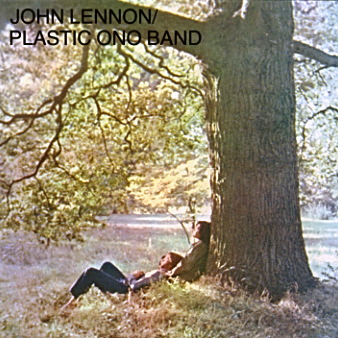
Double Fantasy


"Children, don't do what I have done." - John Lennon, from "Mother," on Plastic Ono Band

"If you want to be a hero, well, just follow me." - John Lennon, from "Working Class Hero," later on Plastic Ono Band

Make up your mind, Lennon!

Monday, August 29, 2011

Top Five Episodes of "Columbo" As Ranked by the Murderer's Hair


5. Nicol Williamson, "How to Dial a Murder" (Originally aired April 15, 1978) Though this Shakespearean stage star's blond locks were receding up top, he kept them flowingly long on the side, in a nest of well-honed curls and waves. Hey, it was the 1970s, when a middle-aged man could keep his hair long and stylish. I have to admit I have a soft spot for Williamson's do because it bears a passing resemblance to my own, although I am not blessed with as much of Nicol's natural waviness, but rather just an unruly bunch of cowlicks.


4. Ruth Gordon, "Try and Catch Me" (November 21, 1977) Miss Gordon keeps her hair swirled around and piled on top of her head, as befits an 81-year-old woman. (She's the oldest killer in any episode of "Columbo.") The dye job is so subtle that I noticed it only fleetingly in one scene, but what places her on this list is when she lets the whole thing pile down in a long pigtail that dangles down her back, turning Miss Gordon into the world's only 81-year-old pixie.


3. Johnny Cash, "Swan Song" (March 3, 1974) Jet-black, shaggy, freed from its AquaNet cage, Cash's hair reaches its own pinnacle in this episode. He is manly but relaxed, hip enough to still come off as cool during the gospel numbers - although he also does a wonderful version of "Sunday Morning Coming Down."

2. Robert Vaughn, "Troubled Waters" (February 9, 1975) Vaughn's hair is legendarily perfect, but what makes it remarkable in this episode - the one on the cruise ship - is that it was actually shot on board the Sun Princess. So every time Vaughn stepped outside, the wind blew his hair every which way, but by the time he came back inside, every single strand had fallen back into its proper place. It's amazing to see a head of hair with its own character arc.


1. John Cassavetes, "Etude in Black" (September 17, 1972) Cassavetes' cascading Greek curls beautifully fit his character, a philandering (and murderous, natch) conductor: artistic, louche, sophisticated. His jetting around in a convertible only tousles his mop to ever-greater insouciance. It is a magnificent performance by a magnificent head of hair.

Dan Fogelberg, Linguistic Innovator

In his song "Make Love Stay," I think that Dan Fogelberg may have pioneered the use of "love" as an intransitive verb. The first two lines of this 1983 No. 1 hit on the Adult Contemporary charts: "Now that we love/Now that the lonely nights are over." Generally one loves something, but the Bard of Peoria is nothing if not innovative.

It's the "we" that makes the phrase work. If Dan had said "Now that he loves," you'd have no idea what the subject was loving. But with "we," it's obvious they love each other. Nicely done, Dan!

Sunday, August 14, 2011

In Record Time


The first long-playing record I ever owned was Elton John's Greatest Hits, which was issued in November 1974 and which came into my possession at the ensuing Christmas. The last new LP I bought was Bob Mould's Workbook, in 1989. I did continue to buy used record albums for some time after that, but for most purposes, I stopped buying wax by the 1990s.

So for me at least, the vinyl era lasted only about 15 years. For the rock-&-roll-music-appreciating public as a whole, the album era can probably be dated to around 1964, with Meet the Beatles. Prior to that, the most popular albums were things like the West Side Story soundtrack, which spent more than a year at the Number One spot on the Billboard album chart (no, really, 54 weeks) in 1962 and 1963. So if everyone else stopped buying albums around the same time I did, the era of the vinyl record album lasted around 25 years.

I was thinking about these issues whilst re-reading Robert Christgau's Consumer Guide to the Albums of the '70s (or whatever it's called; I'm reading it on his Web site). Christgau's work is thoroughly about the physical object, which entails writing about the music contained within the grooves, of course. But it also means he discusses the cover art, and differentiates side one versus side two, and complains once in a while about having to get up and flip the thing over, and even points out pricing issues on occasion. Fittingly, for something that calls itself a consumer guide, one never forgets that Bob (I get to call him Bob because I met him at a party once) is describing a physical product, a big black platter.

Many of us reading Christgau's work at the time didn't realize how doomed the LP was, what a short shelf-life it would end up having. It was the way we had always experienced our precious little rock & roll, and if we had bothered to think about it at all, we would have guessed that things would always be that way, although we didn't and it wouldn't.

By 1989, if the music-buying public was anything like me, we were buying compact discs. The first CD I ever bought was the Cure's Kiss Me, Kiss Me, Kiss Me, and the last new CD I bought was Traffic and Weather by Fountains of Wayne, in 2007. It is entirely possible that I will never buy another physical CD, although who knows. In any case, the era of the compact disc seems to have lasted roughly 15 years, which is even shorter than the era of the rock LP.

If I continue on reading Bob's reviews into the 1990s, I'm sure I won't read about the differences between the two sides of the album, or hear him whine about having to get up and turn over From the Muddy Banks of the Wishkah in order to hear it in its entirety. Perhaps there will be other little telltale details of listening to CDs, although from my vantage point, I couldn't tell you what they would be. At the same time, in 1979, I wouldn't have been able to provide the telltale details of listening to vinyl, either.

There will come a day, you know, when people no longer listen to music on iPods or their phones or whatever else we're carrying around these days. All things must pass in the end.

Thursday, August 11, 2011

Jackson Plus Jackson

It is alarming enough to learn that the Jackson 5 covered Jackson Browne's "Doctor My Eyes." But when I hear that the single actually went to the Top Ten in the U.K., I start to wonder if someone is pulling my leg.

Wednesday, August 10, 2011

Tell Me Why


Aside from the way that Peter Gabriel is able to sound simultaneously bored and self-absorbed, nothing irritates me about pop music more than when a lyricist completely botches what should have been an obvious rhyme. Consider the Boomtown Rats' 1979 hit "I Don't Like Mondays," which goes:

And daddy doesn't understand it,
He always said she was as good as gold.
And he can see no reason
'Cause there are no reasons
What reason do you need to be...


And here every listener in the world is silently mouthing "told," which not only rhymes but completes the thought quite nicely. Everyone except Bob Geldof, that is, who goes with "shown," which is merely assonant and doesn't provide any extra meaning beyond "told" that I can detect.

I wonder if he ever came up with a rhyme for "Nobel Prize."

Thursday, August 4, 2011

All in the Timing


The episodes of Columbo I've been watching have come in two varieties: The ones that originally filled a 90-minute time slot run about 1:13 without commercials, while the ones that filled a two-hour slot go about 1:38.

But tonight I'm watching "Now You See Him," with Jack Cassidy as a magician ("The Great Santini") who - SPOILER ALERT - kills a guy. According to Netflix, the running time on this one is 1:29.

Now, what kind of slot is that going to fill? Was this for a 1:45, just in case the Raiders-Chiefs game ran long?

Does anyone know?