Sunday, April 22, 2018

You're Mickey Mouse!


The Greatest Songs of the 20th Century, Part I:
"You're the Top" (Cole Porter, 1934)


Cole Porter wrote “You’re the Top” in 1934, for his new musical Anything Goes, and in some senses it’s just a list of the best things that were around in 1934. It’s a testament to Porter’s genius that things he credited with being paragons of greatness in 1934 remain, almost without exception, paragons of greatness today.

Many of those paragons were fairly new in their day: Mickey Mouse had made his first film merely six years earlier, while Mahatma Gandhi had been named Time's Man of the Year in 1930. Garbo and the nimble tread of the feet of Fred Astaire had been making movies for less than ten years. I don’t understand what a Bendel bonnet is, but that’s about the only thing that Porter noticed in 1934 that has completely fallen out of favor by 2018. Unless you count Ovaltine, which I wouldn't.

If that dazzling list of exemplars were the only clever thing about this song, it would be delightful, but it’s more than a delight; it’s a classic. It would have been very easy for Porter to maintain the same rhythm for each member of his list of paragons, but he varies them in consistently refreshing ways:

You're sublime
You're a turkey dinner

You're the time
Of the Derby winner
 
 
How simple it would have been to make that last couplet something like “You’re ‘Swing Time’/You’re the Derby winner,” but how much more fun it is stretched out like that. The recharged rhythm keeps you paying attention. And it lends the comparison more texture for the person being celebrated to be analogized to time, rather than another corporeal entity.

What makes it even more fun is the chorus, where the singer returns to describe himself in withering terms: “a worthless check, a total wreck, a flop.” It’s not just a simple paean to one’s inamorata, but a gleeful blast of self-loathing that lends the emotion of the song far greater depth. The fact that the singer is a balloon about to pop makes the list of praises more understandable, or more psychologically tortured, or maybe both.

After the relaxed cadence of the verses, Porter raises the melody of the chorus ever higher, urging the singer to raise the volume ever higher as well. And by the time you get to the virtually one-note line “But if baby, I’m the bottom, you’re the top!” it’s hard not to scream it out.

An early example of the list song, and probably the best one, Anything Goes audiences began demanding encores. Cole Porter began tossing off more verses to fill the encores for Ethel Merman, who introduced the song in the show,  to perform. At one point, Ethel had to wave her hands and tell the audience to stop asking her to go on. She screamed out, "There are no more lyrics!"





Wednesday, December 6, 2017

Ain't Nobody: The Case for Rufus Featuring Chaka Khan


Tell Me That You Like Me On his 1986 single “Higher Love,” Steve Winwood enlisted Chaka Khan to repeat the song's chorus on an extended coda. Winwood was generally considered one of the best of the British white blues singers, but asking Chaka to follow him was a terrible idea: She cleaned his clock, making him sound reedy and shallow with her effortless power. I used to sit through that whole song just waiting for Chaka to blow that skinny white boy away. Nobody upstages Chaka Khan.

Chaka Khan was just 33 at that point, but she was a veteran of the R&B wars, having assumed the lead vocalist spot with Rufus in 1972 at the tender age of 18. (She had already been in the Black Panthers by that point, and gotten married.) Her first chart success with the band was the classic “Tell Me Something Good,” written and produced by Stevie Wonder, from 1973, and almost from that moment on, there was talk of Chaka going solo. The nomination under consideration today is for “Rufus Featuring Chaka Khan,” but clearly we are intended to include her own body of work as well as Rufus (or Ask Rufus, as they were initially known, after the advice column in Mechanics Illustrated).

Khan held on with Rufus through nine albums and 13 Top Forty hits (there were also three non-Khan Rufus albums, all of which stiffed), culminating in the dazzling farewell single “Ain’t Nobody,” from 1983, which set the template for ‘80s dance records. She then immediately hit big with “I Feel for You,” written and produced by Prince, with a harmonica solo from her old benefactor Stevie Wonder and an introductory rap from Melle Mel. The personnel listing alone confirms Chaka Khan as R&B royalty.

Chaka wrote Rufus’ “Sweet Thing” with guitarist Tony Maiden, taking it to the Top Five in 1975, then sang on Quincy Jones' "I'll Be Good to You," in 1989. All in all, her hitmaking career spanned nearly 25 years, and all the hits are indelible, holding up very well.  

Let Me Rock You, That's All I Want to Do When I was compiling my framework for how to think about each vote, I realized that in a Rock & Roll Hall of Fame, coolness is the paramount virtue. Nobody was cooler than Chaka Khan. Just think about that name, one of the great names in rock & roll: distinctive but not jokey, heavily rhythmic, exotic without being entirely foreign. These things matter. It’s not even completely made up, since the former Yvette Stevens adopted it upon marrying her first husband, bassist Hassan Khan.


Chaka Khan and Rufus have been on the ballot before, and fallen short; I don’t know if there will be another go-round for either. The time to vote for her is now. I vote yes for Rufus Featuring Chaka Khan. 

Monday, December 4, 2017

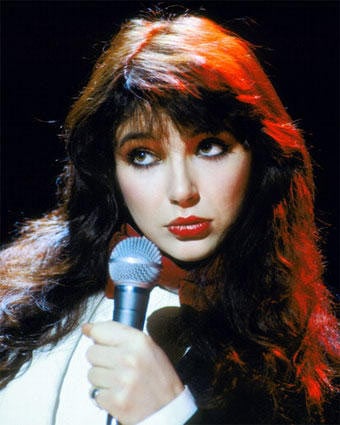
The Sensual World: The Case of Kate Bush

Running Up That Hill Kate Bush is hugely respected by a lot of people I respect. Not only is her music sui generis, instantly identifiable as her own indefinable product, but from the beginning of her career, she was a one-woman gang, writing and producing (and playing piano on) her own material. She was the first woman ever to have a Number One hit in Britain with a song she wrote herself, with 1978's "Wuthering Heights," when she was just 19.

For a while it looked like she might be a star here in the U.S. of A., too. She was the musical guest on Saturday Night Live on December 9, 1978 (Eric Idle was the host), and though it took a while, she even had a Top Forty hit here, with "Running Up That Hill" in 1985.

But it wasn't to happen. Her second-highest charting single was the execrable "Don't Give Up," with Peter Gabriel. Kate Bush's impact on the U.S. record-buying public has been virtually nil.

That doesn't have to be a disqualifier, though. Leonard Cohen sold fewer records than Frankie Yankovic, but I still cheerfully voted for him, because of his influence on the larger music world and because his records are just so ridiculously good. I'm having a hard time seeing Kate Bush as qualifying on either accord.

I'd Make a Deal With God I think her records are well-written but overproduced, and her voice is kind of silly. She skirts the line between dramatic and pretentious, and it can be really tough to stay on the right side of that boundary. (In the video for "Wuthering Heights," at one point, she looks like she's speed-skating in a formal gown.) You can see why some people worship her, but I'm never gonna be one of those people.

I don't mean to be negative about her work, which can be very striking, and which never sounds like anyone other than Kate Bush. That's a very good thing. And when she lands just right, her music is quite beautiful.

But I just don't see her having a huge enough impact on the world of rock & roll, or even of American pop music (I'm not qualified to comment on British pop) to extend her a vote. In the end, I think Kate Bush is an easier artist to admire than to listen to. I vote no on Kate Bush.

Sunday, December 3, 2017

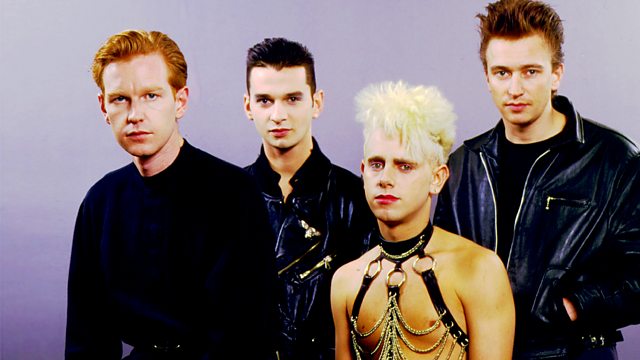
Living in Synth: The Case of Depeche Mode


All I Ever Wanted Depeche Mode seems like they ought to be the epitome of something, being one of the most popular and certainly the most long-lived of the British synth-pop groups that emerged in the early 1980s. They were stars in England almost from their first release in 1980, although they didn’t break through in the U.S. until “People Are People” went to Number 13 in 1985. But “Just Can’t Get Enough” – which, let’s face it, is a much better song – had crashed the dance charts in 1981, off the band’s first album, Speak & Spell.

The primary songwriter on Speak & Spell was Vince Clarke, who wrote nine of its 11 songs, including “Just Can’t Get Enough,” but he left the band after that first record came out. “We basically just weren't getting on,” Clarke said later. "We were really young, and we did quite well very quickly, and it all became too much.” Starting with their second album, Martin Gore took over the songwriting, and he proved to be almost as good at it as Clarke. (Clarke, by the way, was born Vincent Martin, but changed his name because he was on the dole and would lose his benefits if the government knew he was making money via his band.)

Changing chief songwriters is as fraught a move as changing frontmen, and even moreso for a synth-pop group, where the material is pretty much the entire band. Pink Floyd changed primary songwriters and thrived, as did the Doobie Brothers, but it’s pretty rare for a band to succeed that way.

Depeche Mode only got bigger with Gore as its composer, although I don't think they ever got better. The band’s 1990 album Violator spawned three hit singles in the U.S., including “Enjoy the Silence,” their only Top Ten hit, and “Personal Jesus,” arguably their best post-Clarke song. They had Top Forty hits as late as 1997, and had a Number One hit on the U.S. dance charts as late as 2013 with “Heaven.”

That should have made them some kind of grizzled legend in the electronic-dance music world, but they never quite seemed to attain that status. Daft Punk has saluted artists ranging from Philip Glass to the Eagles as influences, but never, to my knowledge, Depeche Mode. Depeche were never as good as other 1980s dance titans like New Order or Pet Shop Boys, even though they outlasted those groups as hitmakers. 

Let’s Play Master and Servant Vince Clarke seems to be the sticking point here. It’s hard for me to support a band that lost its key member after one album, and was never as good again. After Clarke left Depeche Mode, he formed Yaz with Alison Moyet and released “Don’t Go” and “Situation,” both of which are better than anything in the Depeche catalog. Then he went on to form Erasure, which was a lot more fun than Depeche, especially with “A Little Respect.” And none of those groups was the best British dance-pop group of the 1980s; New Order was.

Depeche Mode blazed trails in EDM, arguably laying the groundwork for a genre that continues to be vital today. “Personal Jesus” is 26 years old and still sounds pretty fresh. They even established themselves as a must-see live act, which you wouldn’t expect from a synth-pop band. I like Depeche Mode; honestly, I do. I just don’t see what they’ve done to differentiate themselves from other bands of their ilk. New Order hasn’t even ever been nominated, for pity’s sake. I vote no on Depeche Mode.


Tuesday, November 28, 2017

Don't Call This a Comeback: The Case of LL Cool J

I Can't Live Without My Radio LL Cool J had a burst of hits in his very early career. “I Can’t Live Without My Radio,” released in 1985 when he was just 17, didn’t make the pop charts, but it went to the Top Twenty on the R&B charts, and became a signature song for Cool J. It was followed by “I Need Love,” “Going Back to Cali,” “Around the Way Girl” and “Mama Said Knock You Out,” all of which made the Top Forty and all of which are very familiar to me.

Ironically, although “Mama Said” urged “Don’t all this a comeback,” it actually marked the end of the first phase of Cool J’s career. He was gone from the pop charts for a few years (the album 14 Shots to the Dome, his gangsta rap effort, was a bit of a flop) before landing again with four more Top Ten hits in 1995 and 1996. Then he went off to be a movie star before returning to the pop charts with four more hit singles between 2002 and 2006.

Maybe it’s just the trajectory of my own life, which got me out of the hip-hop game in the mid-1990s, but I get the feeling that LL Cool J will ultimately be remembered for that first run of singles. They were clearly hip-hop but also well-crafted pop songs, to the point that “I Need Love” was covered by Irish singer Luka Bloom. LL Cool J wrote and produced all those singles, too. And he did all this by the time he was 23. 


Don't Tell Me, I Don't Think So At first blush, I assumed that LL Cool J was a lightweight pop rapper, but the more I look at him, the more impressed I get. The only other rap act to have legitimate, multiple pop hits that early on was Run-D.M.C., who were inducted in the Rock & Roll Hall of Fame back in 2009. Gangsta rap kind of overcame LL's brand in the early 1990s, but that shouldn't overshadow what a trailblazer he was. Neither should his latter career in soft-headed sitcoms and NCIS spinoffs. And the fact that he was able to come back with more hits after N.W.A, and then even more hits after the advent of Eminem, is to his strong credit.

Having said that, I can't quite bring myself to vote for LL Cool J. His stuff wasn't that strong, and there are other acts I'd rather support at this time. But I wouldn't mind it if he made it in.

Sunday, November 26, 2017

Sad Wings of Destiny: The Case of Judas Priest


British Steel By far the most interesting thing about the British hard rock band Judas Priest is that after a couple of decades of purveying nasty leather-clad pop metal, lead singer Rob Halford came out as gay. The second most interesting thing about them is that Beavis and Butt-Head were huge fans, with Beavis in particular being fond of shouting out the chorus to the Priest’s song “Breaking the Law.” 

The third most interesting thing about Judas Priest is that after Halford temporarily quit the band, he was replaced by a kid named Tim "Ripper" Owens, who was the lead singer in a Judas Priest tribute band. This became less interesting when Journey more or less did the same thing. At any rate, these are not the elements of a Hall of Fame resume.

Judas Priest formed in 1968, released their debut album Rocka Rolla in 1974, and are still out there fighting the good fight, so you have to give them credit for longevity. It’s incredible that they’ve lasted this long without ever being any good, or even very popular. They’ve never had a Top Forty hit or a Top Ten album in the U.S. They have had exactly two songs land in the Top Ten on the Mainstream Rock chart, “Heading Out to the Highway” and “You’ve Got Another Thing Comin’.” Whoop-de-do.

They’re basically Spinal Tap. For a while Halford would enter their shows on a Harley-Davidson, and at one show in Toronto in 1991, he was seriously injured when he rammed his motorcycle into the drum riser, which he couldn’t see because it was hidden by dry ice mist. They later released a concept album about Nostradamus.

Defenders of the Faith Why are they on the Hall of Fame ballot? Deep Purple got in a couple of years ago, and I guess Judas Priest might be the next logical step after them. Even then, I don’t see what differentiates them from Iron Maiden or the Scorpions – as odious as the Scorpions are, at least people still sometimes listen to “Rock You Like a Hurricane” once in a while. As I was preparing to write this essay, and the only Judas Priest song I could even remember was the wan “Living After Midnight,” because it was on MTV a lot back in the Alan Hunter days.

The Hall of Fame seems to be making more of a nod to the populist acts, ones who were never taken seriously by critics but maintained a solid fan base among the dodgier reaches of the rock & roll audience. But it’s hard to say that Judas Priest is even among the most significant or respected of these groups. I'd sooner vote for .38 Special. Judas Priest is an easy no vote for me.

Saturday, November 25, 2017

What Happened, Miss Simone? The Case of Nina Simone


Little Girl Blue Everybody loves Nina Simone, a world-class classical pianist who turned into a jazz-folk legend with her own innovative style of performing. Her talent or significance is not really in question here. The predominant question is, does she belong in a Hall of Fame dedicated to rock & roll, when she has very little to do with the genre? Yes, she covered “Don’t Let Me Be Misunderstood,” but Frank Sinatra covered “Something,” and I don’t see Ol’ Blue Eyes on the ballot.

After her early lifetime was consumed with classical piano, Miss Simone only turned to singing when the Atlantic City nightclub she was playing in promised her more money if she vocalized as well.  That was also when she adopted her stage name. Did you know that Nina Simone had an actual hit single? In 1957, her version of "I Loves You, Porgy" (off her debut album, Little Girl Blue) went to Number 18 on the Billboard pop charts - and Number Two on the R&B charts. 

I suppose this can push her case in either direction:  Having a Top Twenty hit in the first flower of the rock & roll era establishes her as at least a pop act, if not a rock & roll act. On the other hand, Porgy and Bess is nobody's idea of a rock opera.

Trouble in Mind She did become a civil rights folk hero in 1964 with her song "Mississippi Goddam," the blasphemy being very carefully chosen in response to the murder of Medgar Evers.  It obviously never became a hit, but it did become one of her signature songs, and she sang it in Montgomery, Alabama, in 1965 in front of 10,000 people who had marched there from Selma. Miss Simone later claimed that the record industry sabotaged her sales because of that controversial song, but that ship had already sailed. Since "I Love You, Porgy," she hadn't had a single reach higher than Number 92 on the charts.

Incidentally, one of the greatest songs in the modern pop canon is “Everyone’s Gone to the Moon,” written and originally recorded by Jonathan King. Many artists have covered it, from Marlene Dietrich to the Flaming Lips. I was very excited to see that Miss Simone had also done it – but she sings it in a weird atonal, off-key voice. Given that it’s Miss Simone, I’m sure there’s a purpose to this, but I can’t imagine what it is. If anyone knows, please contact the author c/o this blog.

I Put a Spell on You None of that isn't to say that she wasn't great. She was a hugely compelling performer incorporating a wide range of styles, to the point that it was fairly impossible to define what genre she inhabited, and she wrote a lot of her own material as well. Her fierce courage and sense of self-worth would influence many generations of African-American artists, and a whole lot of white ones too.

Nina Simone has gotten a lot of deserved attention lately, nearly 15 years after her death, from the documentary What Happened, Miss Simone? and the fictionalized feature Nina, among other events. It's well earned, as she was an important and admirable artist. But she wasn't rock & roll. I'd love to vote for Loretta Lynn, too, but she's not rock & roll either. I vote no for Nina Simone.